


 Deutsch
 English
 Español
 Français
 Nederlands
 Português


 Share
Share




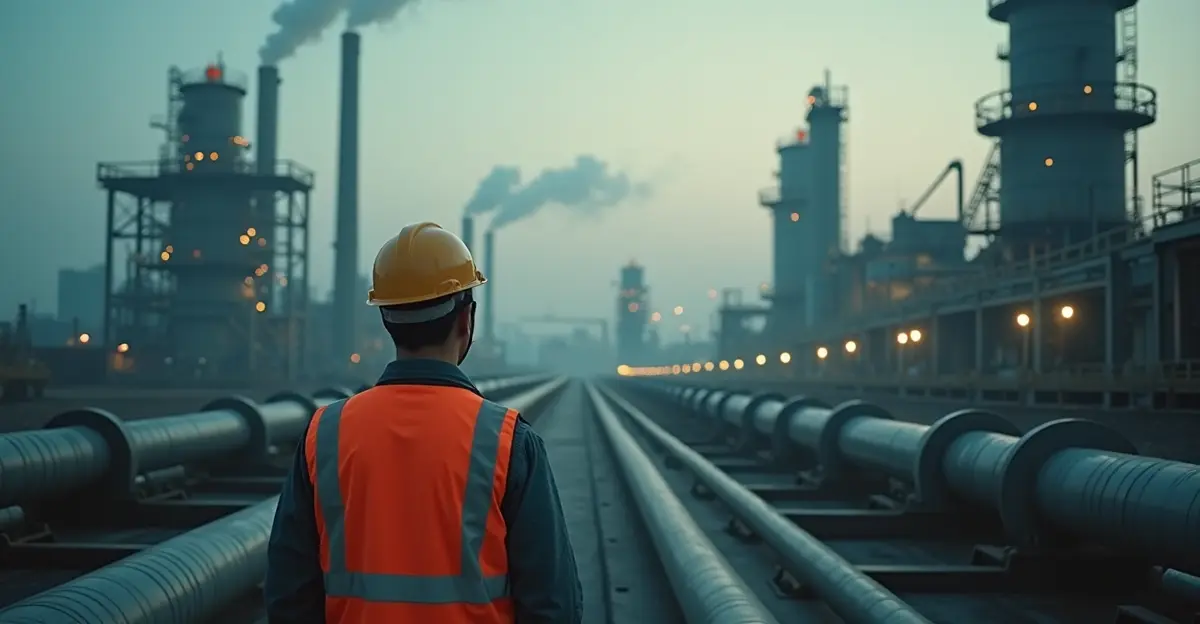
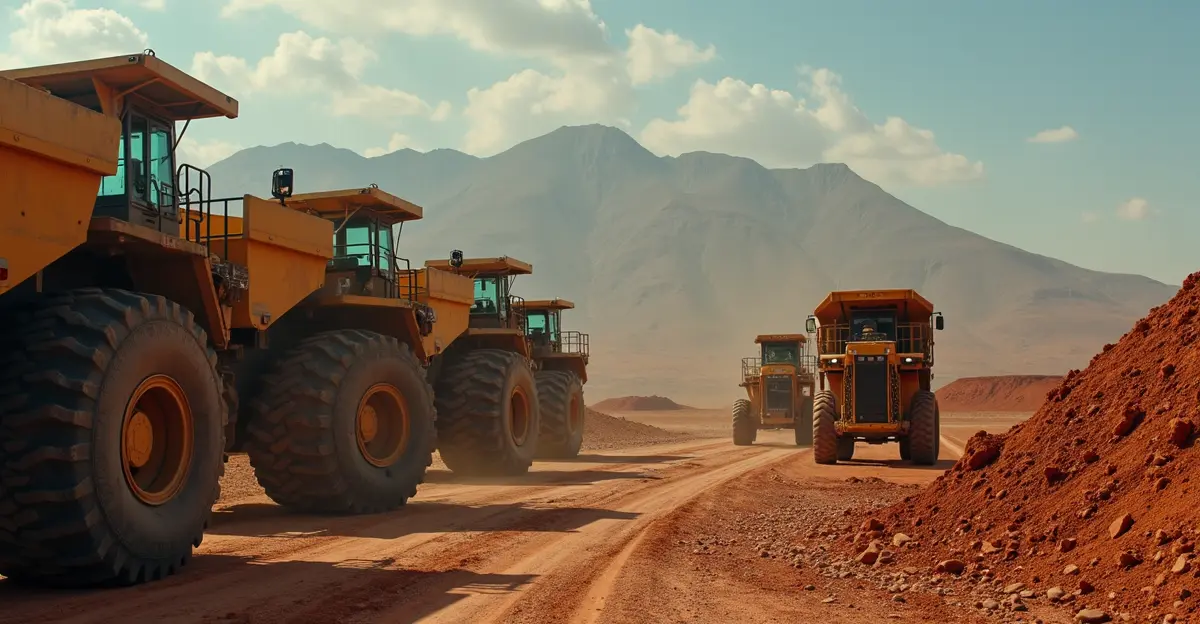
China's 2026 export control regime, embedded in its 15th Five-Year Plan, has fundamentally redrawn global critical minerals supply chains, exposing deep structural vulnerabilities in Western economies. Beijing now controls approximately 90% of global rare earth processing, 80% of tungsten, and 60% of antimony — materials essential for defense systems, electric vehicle batteries, and green technology manufacturing. A multi-institutional analysis drawing on OECD and European Parliament data reveals that modern industrial economies remain fundamentally dependent on Chinese-controlled processing routes, with China projected to supply over 60% of refined lithium and cobalt through 2035.
China's 15th Five-Year Plan and the Weaponization of Mineral Processing
The 15th Five-Year Plan (2026-2030), unveiled in March 2026, explicitly prioritizes strategic control over rare earths and critical minerals. For the first time, Beijing has formally embedded export restrictions as a tool of geoeconomic statecraft, shifting from mass manufacturing to high-value supply chain dominance. The plan calls for expanded domestic exploration of industrial metals while strengthening export controls on processed materials.
Export restrictions introduced in 2025-2026 have triggered sixfold price spikes for gallium, germanium, and antimony in international markets. European firms now report that fewer than one in four license applications for Chinese mineral exports are approved. Rather than imposing outright bans, Beijing employs a strategy of managed dependence — using temporary, reversible restrictions to maintain pricing power and extract strategic concessions. A November 2025 truce exemplified this approach: China suspended planned export bans to the United States in exchange for tariff reductions, while keeping the core control architecture intact. New restrictions on unprocessed rare earths took effect January 1, 2026, and categorical prohibitions on exports to U.S. military end-users remain in place.
The 15th Five-Year Plan critical minerals strategy also includes a whitelist system for tungsten, antimony, and silver, restricting supply to just 15-44 approved companies per mineral. This creates a bottleneck that allows Beijing to control both price and availability, effectively dictating terms to global manufacturers.
Western Vulnerabilities: Defense, EVs, and Green Technology at Risk
The structural dependence on Chinese processing is most acute in three sectors. For defense, rare earth magnets are essential for precision-guided munitions, radar systems, and fighter jet components. The U.S. Department of Defense has identified 12 critical minerals for which America is fully import-dependent, and relies on imports for over 50% of 29 more. In the electric vehicle sector, China controls roughly 70% of global lithium refining and over 60% of cobalt processing — materials that are the backbone of lithium-ion battery production. For green technology, permanent magnets used in wind turbines and solar panel inverters depend almost entirely on Chinese rare earth processing.
A European Court of Auditors special report published in 2026 paints a stark picture: the EU imports 97% of its magnesium from China, 71% of gallium, and between 69-74% of key rare earths including neodymium and praseodymium. Of 26 critical minerals studied, 10 are fully imported, and none of the 17 rare earth metals are mined within the bloc. The report warns that without these materials, Europe faces no energy transition, no competitiveness, and no strategic autonomy. The EU's 2030 renewable energy target of 42.5% is now considered out of reach due to underdeveloped domestic mining, refining, and recycling capacity.
The EU Critical Raw Materials Act strategic projects aim to address this, but mining projects in Europe can take up to 20 years to become operational, making near-term contributions impossible. Over 80% of European companies remain dependent on Chinese supply chains for minerals essential to their operations.
The US Response: Stockpiles, Bilateral Deals, and the FORGE Initiative
The United States has launched the most aggressive strategic response since the Cold War. Project Vault, announced in February 2026, is a $12 billion public-private critical minerals reserve backed by a $10 billion Export-Import Bank loan — the largest in the bank's 92-year history — plus $2 billion in private capital and $7.5 billion in congressional appropriations. Participating companies like Boeing, GM, and GE Vernova pay fees for guaranteed access during supply disruptions, with release triggers based on predefined market-disruption criteria rather than political authorization.
Simultaneously, the U.S. has expanded the National Defense Stockpile through the Defense Logistics Agency, with the April 2025 One Big Beautiful Bill Act allocating $7.5 billion for critical minerals, including $2 billion designated for stockpile expansion by 2027. A notable example is a $245 million sole-sourced contract to United States Antimony Corporation to supply approximately 3,026 tonnes of antimony metal over five years.
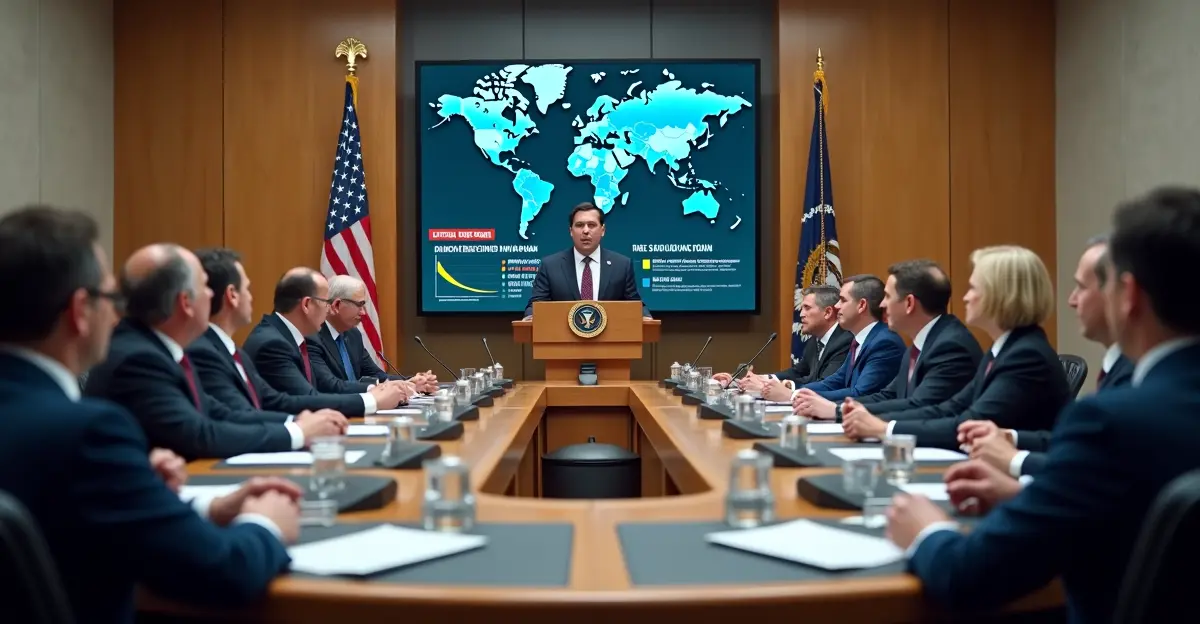
On the diplomatic front, the U.S. launched FORGE (Forum on Resource Geostrategic Engagement) at the inaugural Critical Minerals Ministerial in February 2026, attended by delegations from 54 countries. FORGE replaces the Minerals Security Partnership and creates a preferential trade-and-investment zone for critical minerals with coordinated price floors. The U.S. signed 11 new bilateral critical minerals frameworks with countries including Argentina, Morocco, the Philippines, the UAE, and the UK, bringing the total to 21 deals in five months. The U.S. is mobilizing over $30 billion in financing support, including EXIM's Project Vault, to build secure, diversified, and resilient supply chains end-to-end.
Bilateral deals with Australia and Ukraine are particularly significant. A framework agreement with Australia pledges at least $1 billion each to support gallium production. The U.S.-Ukraine Reconstruction Investment Fund, signed in April 2025, focuses on titanium, uranium, graphite, and other critical minerals, with a $150 million fund to mobilize private capital for post-war reconstruction while enhancing allied critical minerals security.
The US National Defense Stockpile expansion 2026 represents a return to Cold War-era stockpiling policy, but experts question whether supply capabilities can meet the ambitious targets.
The EU's 60 Strategic Projects Under the Critical Raw Materials Act
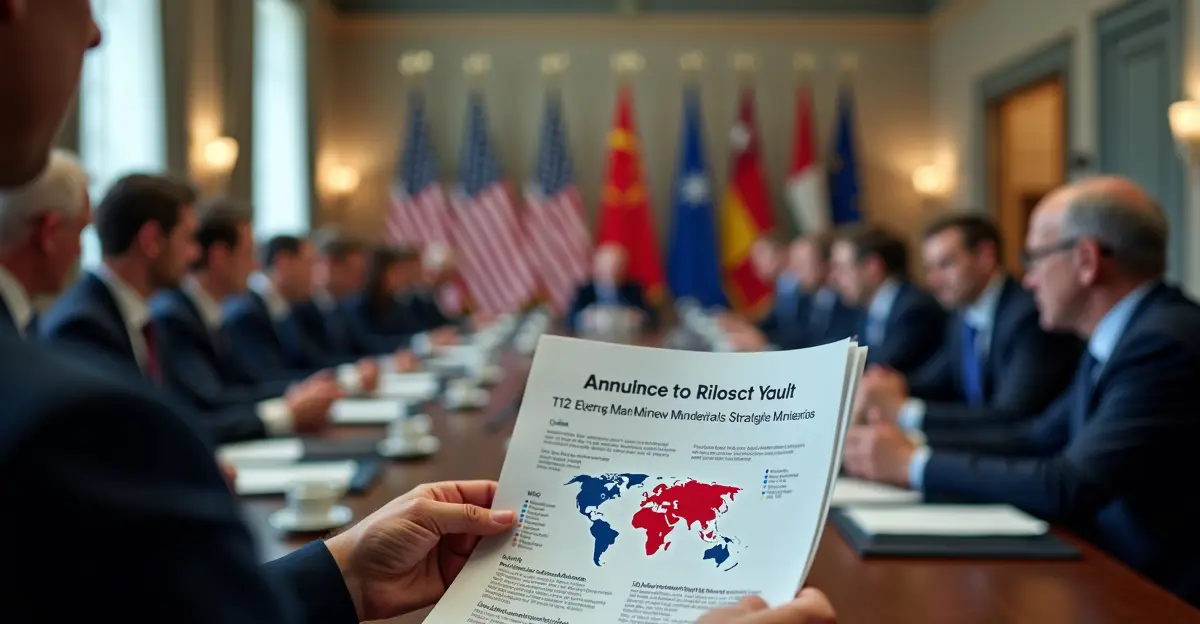
The European Union has designated 60 Strategic Projects under the Critical Raw Materials Act (CRMA), which entered into force in May 2024. The first batch of 47 EU-based projects was approved in March 2025, followed by 13 non-EU projects in June 2025 and additional designations through the second call for applications that closed on January 15, 2026. These projects span extraction, processing, and recycling across 14 critical raw materials including lithium, cobalt, rare earths, graphite, nickel, tungsten, and gallium.
Notable projects include the Jadar lithium mine in Serbia, the Zandkopsdrift rare earth project in South Africa, and a graphite mine in Greenland intended for battery production. The projects benefit from streamlined permitting (maximum 27 months for extraction, 15 months for processing and recycling) and improved access to financing through the European Investment Bank and national promotional banks.
However, the European Court of Auditors warns that the CRMA's targets — 10% of annual consumption from domestic extraction, 40% from domestic processing, and 25% from recycling by 2030 — are unlikely to be met. Mining projects in the EU face an average timeline of 12-20 years from discovery to production, far exceeding the current geopolitical window. The EU Critical Raw Materials Act targets 2030 remain aspirational without accelerated permitting and massive investment.
Impact on Energy Transition Timelines and Defense Industrial Capacity
The critical minerals bottleneck directly threatens global energy transition timelines. The International Energy Agency's Global Critical Minerals Outlook 2025 projects that lithium demand will grow fivefold by 2040 under stated policies, while graphite and nickel demand double. Copper faces a projected 30% deficit by 2035 due to declining ore grades and rising project costs. Lithium shows a 40% supply gap by 2035. Without diversified processing capacity, these deficits will translate into higher costs and delayed deployment of EVs, battery storage, and renewable energy infrastructure.
For defense, the implications are equally severe. The Pentagon's critical minerals mission, launched in October 2025, underscores the strategic importance of these materials for advanced weaponry, electronics, and aerospace components. The U.S. military's dependence on Chinese rare earth magnets for precision-guided munitions and radar systems represents a critical vulnerability in any potential conflict scenario.
The energy transition critical minerals supply chain is at an inflection point where Western nations must decide between accepting managed dependence, pursuing costly independence, or adopting a hybrid model balancing resilience and realism.
Expert Perspectives: A Narrowing Window for Action
Analysts at the Atlantic Council and multiple research institutions warn of a narrowing 12-18 month window to build independent processing capacity before Chinese dominance becomes structurally entrenched. Rebuilding independent alternatives typically requires 20-30 years — far exceeding the current geopolitical timeline. The multi-institutional analysis argues that China is weaponizing control rather than scarcity, using temporary restrictions to maintain pricing power and discourage Western investment in alternatives.
The question is not whether the West can achieve complete independence from Chinese processing, but whether it can build sufficient redundancy to withstand coercive pressure, notes a senior fellow at the Atlantic Council. The OECD Inventory of Export Restrictions on Critical Raw Materials 2026 confirms that export restrictions have reached an all-time high, with roughly 70% of global exports of cobalt and manganese subject to at least one restriction between 2022 and 2024.
FAQ
What is China's 15th Five-Year Plan and how does it affect critical minerals?
China's 15th Five-Year Plan (2026-2030) explicitly prioritizes strategic control over rare earths and critical minerals, embedding export restrictions as a tool of geoeconomic statecraft. It strengthens China's dominance over processing and refining while expanding domestic exploration and export controls.
How much of the world's critical mineral processing does China control?
China controls approximately 90% of global rare earth processing, 80% of tungsten, 60% of antimony, and over 60% of refined lithium and cobalt. This dominance is projected to continue through 2035.
What is Project Vault?
Project Vault is a $12 billion public-private U.S. critical minerals reserve announced in February 2026, backed by a $10 billion Export-Import Bank loan. It provides guaranteed access to stockpiled minerals for participating companies during supply disruptions.
How many Strategic Projects has the EU designated under the CRMA?
The EU has designated 60 Strategic Projects under the Critical Raw Materials Act, including 47 EU-based projects and 13 non-EU projects, covering extraction, processing, and recycling of 14 critical raw materials.
What is the FORGE initiative?
FORGE (Forum on Resource Geostrategic Engagement) is a U.S.-led plurilateral coalition of 54 countries announced in February 2026. It creates a preferential trade-and-investment zone for critical minerals with coordinated price floors, replacing the Minerals Security Partnership.
Conclusion: The Emerging Contest Between Multilateral Alliances and Bilateral Resource Diplomacy
The critical minerals landscape in 2026 represents the most consequential inflection point for global supply chains in decades. China's export controls under the 15th Five-Year Plan have demonstrated the vulnerability of Western economies to coercive leverage over strategic materials. The U.S. response — combining Project Vault, FORGE, and bilateral deals — represents a shift from purely domestic stockpiling to international coalition-building. The EU's 60 Strategic Projects under the CRMA aim to build domestic capacity but face daunting timelines.
The emerging contest between multilateral alliances (FORGE, the EU's CRMA partnerships) and bilateral resource diplomacy (U.S.-Australia, U.S.-Ukraine deals) will shape the future of critical minerals governance. The key challenge remains transforming bilateral leverage into genuine plurilateral coordination. With a narrowing 12-18 month window to act, Western nations face a stark choice: accept managed dependence on Chinese processing, pursue costly and time-consuming independence, or adopt a hybrid approach that balances resilience with realism. The decisions made in 2026 will determine the trajectory of energy transition, defense industrial capacity, and geopolitical power for decades to come.


Follow Discussion